The Sanctuary: The Perimenopause Pattern Behind Bloating, Weight Gain, and Brain Fog
The Sanctuary is one of nine perimenopause patterns identified by the free Muse Decoder. It describes a digestive system that has slowed, so food and fluid accumulate instead of converting into energy — producing weight gain, fluid retention, and brain fog.
If your weight has shifted without any real change to how you eat, if mornings arrive heavy and foggy, if your limbs feel swollen and slow to move — this is the Sanctuary pattern. It is not a failure of willpower. It is a digestive system that has lost some of its power to transform what it receives.
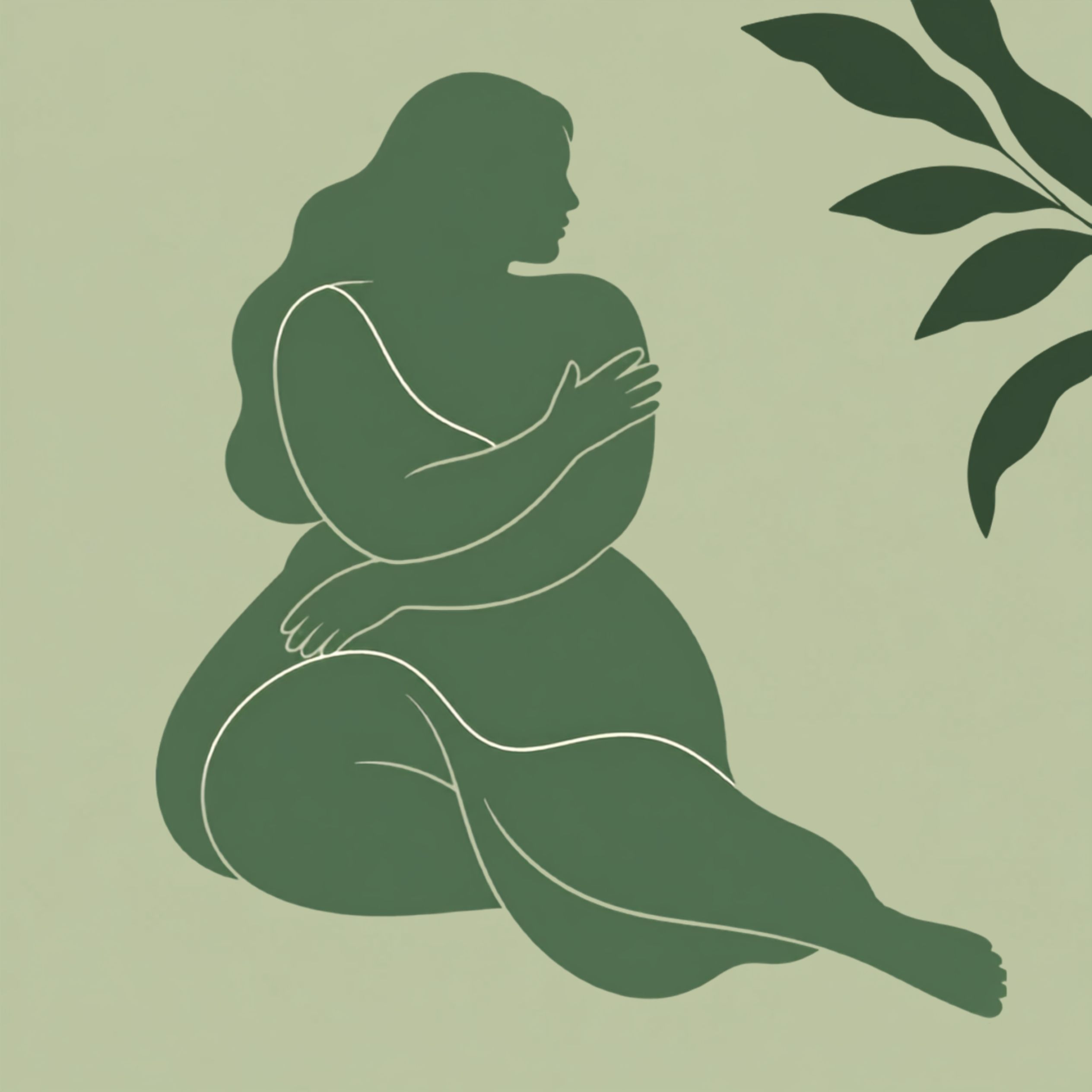
Her nature
What she carries
A capacity to hold what others cannot, atmosphere, emotion, everything unprocessed that passes through a room.
What it costs her
Without release, that same capacity erases her gradually. The Sanctuary who only accumulates becomes the thing she's held.
What she's being asked to do
You don't need to become less permeable. Learn to release what was never meant to stay.
The pattern
What this feels like
Soaking up the world until you are heavy with it. You walk into a room and instantly feel the unspoken tension. You feel full before the day has begun, a heavy, damp kind of exhaustion that makes your limbs feel swollen and your mind cloudy. You have lost the ability to filter. The world is pouring into you and you are holding it all.
Do you recognise this?
- Weight gathering around the middle despite no dietary change
- Heavy, foggy thinking, like moving through cotton
- Afternoon energy crash and carbohydrate cravings
- Bloating and slow digestion
Why this happens: three lenses, one pattern
Your gate has lost its tension. Previously, your hormonal rhythm provided a clear edge to your identity. As these levels shift, the edge softens, creating a state of stagnation. Just as a wet sponge becomes heavy, your system is struggling to wring out daily inputs, leading to the heaviness, puffiness, and mental fog that define this pattern. Declining oestrogen has also reduced insulin sensitivity, which means food that used to become energy now accumulates instead.
Declining oestrogen reduces insulin sensitivity — glucose that used to become energy now accumulates instead, particularly as visceral fat. The weight, puffiness, and fog are metabolic consequences, not character traits.
The Spleen governs the body's ability to transform food, fluid, and emotion into usable energy. When that function weakens, what enters the body stops converting and begins to accumulate — dense, heavy, and damp, like wet laundry that never gets the chance to wring out.
Kapha, the earth and water quality, has accumulated in excess, suppressing the digestive fire. What remains is Ama: the residue of incomplete digestion. The brain fog of this pattern is Ama in the nervous tissue — a physical phenomenon, not a mood.
Warm the digestion and move what has stagnated — your two priorities. Cold food, raw food, and undigested emotion all feed this pattern. Heat and gentle movement come before any plant ally or supplement.
Nutrition as first practice
Food is a tool to create clarity and movement. Three principles guide everything else:
- Warm, drying foods that support digestion, rather than adding to what has already accumulated
- Astringent foods, which have a gathering, defining quality
- Less cold dairy, raw food, and refined sugar — all of which add to internal dampness
A day of eating
Breakfast
If mornings start heavy, a cold smoothie or yoghurt and fruit might be part of why — not because those foods are bad, but because they're cold and wet, and your system already runs cold and wet. Swap one cold breakfast for something warm and simply cooked: porridge with cinnamon and a pinch of dry ginger, scrambled eggs, or a small bowl of soup or broth if breakfast has never really appealed to you.
Why it works, and a week of swaps
This pattern is about a digestion that has lost some of its fire, and cold or raw food asks that fire to do more work first thing, before it's had a chance to wake up. Warm, cooked food meets it where it already is.
- Porridge with cinnamon instead of a cold smoothie
- Scrambled eggs instead of yoghurt and granola
- A small bowl of soup or broth if breakfast has never really appealed to you
- Leftover roasted vegetables, warmed through, eaten slowly
Give it a week and notice whether the mid-morning heaviness shifts at all. A small change with a lot of information hiding inside it.
Lunch
Make this your main meal. Dry-roasted buckwheat with plenty of cooked vegetables and a little mustard oil, with enough dry ginger to feel it. Eat around midday, while your digestion has the most fire behind it, rather than saving the biggest plate for evening.
Dinner
Lighter than lunch, but still warm and cooked through — soup, stew, or roasted vegetables with some protein. Simmer rather than serve raw, and finish eating a few hours before bed so digestion isn't still working when you lie down.
Snacks
Keep them warm where you can — ginger tea, a small bowl of leftover soup, roasted nuts rather than raw ones. Fewer and further apart matters more than what's in them; constant grazing keeps digestion working without a break.
The rhythm matters as much as what's on the plate. Leave real gaps between meals instead of grazing through the day, and treat at least one meal, ideally lunch, as something you actually sit down for, without a screen, chewed slowly. Digestion starts before the first bite reaches your stomach.
This is educational content, not medical advice, diagnosis, or treatment. If you are pregnant, nursing, taking medication, or managing a health condition, check with a qualified healthcare practitioner before changing your diet.
Earthbody practice
Nutrition is the first practice. The deeper one is what Muse Rebellion calls earthbody practice — small, repeatable ways of putting your body back in contact with a rhythm older than the pattern you're in. For the Sanctuary, that rhythm is movement: the lymphatic system has no pump of its own, it moves through you moving.
The Wringing Out Walk
Go outside and walk briskly enough that your arms swing freely. Not a stroll, a pace with intention. The lymphatic system, which the Sanctuary pattern suppresses, has no pump of its own: it moves through movement. Fifteen minutes of brisk walking on uneven ground, grass, path, hillside, activates lymphatic drainage in a way that flat indoor movement does not. Go alone. Leave your phone. Notice what you feel when you stop. The Sanctuary needs to wring out regularly. Walking in nature is how the wringing begins.
The Daily Wringing Out
At the end of each day, shake your hands loosely from the wrists for 30 seconds — this physically stimulates lymphatic drainage and nervous system discharge. Then say once, aloud or internally: "This is mine. This is not mine." Name one thing from the day to keep, and one thing that belongs to someone else that you can set down.
Go deeper: a pose, a mudra, and a sound for the Sanctuary
Pose — Supine Twist. Lie on your back, draw one knee to the chest and guide it across the body to the opposite side. Extend the arm of the same side and look away from the knee. Hold for three minutes each side. The twist wrings the digestive organs, stimulates lymphatic drainage, and physically moves what has accumulated. Do it daily, not only when you feel heavy.
Mudra — Apana Mudra. Touch the tips of the middle and ring fingers to the tip of the thumb. Hold the index and little fingers extended. Apana mudra governs the downward and outward movement of energy — elimination, release, letting go. Practise for five to ten minutes while in the supine twist position.
Sound — Hu. The Hu sound (pronounced "who" with rounded lips, like a warm breath) is a Taoist healing sound for the Spleen and Stomach, the organs whose function defines this pattern. Place both hands over the navel area. Inhale, and exhale the Hu sound with gentle warmth. Six to nine repetitions after meals, especially the evening meal.
Not sure this is your pattern?
The Sanctuary is one of nine patterns the Muse Decoder identifies by reading your body through Ayurveda, Chinese medicine, and Western physiology. If accumulation, fog, and heaviness aren't quite it, one of the other eight might fit better. The free decoder takes about ten minutes.
Take the Muse Decoder →The nine Earthbody Muses: the Catalyst, the Seer, the Oracle, the Sanctuary, the Weaver, the Deep Diver, the Truth-Teller, the Transformer, and the Deep Spring. Explore the Library.
Frequently asked questions
What is the Sanctuary pattern?
The Sanctuary is one of nine hormonal and energetic patterns identified by the Muse Decoder. It describes a digestive system that has lost some of its power to transform food, fluid, and emotion into usable energy, which is what produces the weight gain, fluid retention, and brain fog this pattern is known for.
Why does digestion slow down during midlife?
Declining oestrogen reduces insulin sensitivity, so food that used to become energy accumulates instead, as weight, fluid, and fog. Digestion slows at the same time, which compounds the effect.
What is the fastest first change to try?
Swap one cold breakfast, a smoothie, or yoghurt and fruit, for something warm and simply cooked, like porridge or scrambled eggs. Cold and raw food ask a digestive fire that is already low to do more work before it has had a chance to wake up.
How do I know if the Sanctuary is my pattern, and not one of the other eight?
The free Muse Decoder reads your body through Ayurveda, Chinese medicine, and Western physiology and takes about ten minutes. If heaviness, fog, and fluid retention are not quite your experience, it will point you toward a better match.