The Oracle: The Perimenopause Pattern Behind 3am Waking, Racing Thoughts, and Exhausted Days
The Oracle is one of nine perimenopause patterns identified by the free Muse Decoder. It describes a cortisol rhythm that spikes in the early hours instead of at dawn, waking you between 1am and 3am with a mind that's already running.
If you fall asleep fine but wake between 1am and 3am with your thoughts already in motion, if daytime arrives with a deficit that never quite closes — this is the Oracle pattern. It is not insomnia in the ordinary sense. It is a cortisol rhythm that has shifted its timing.
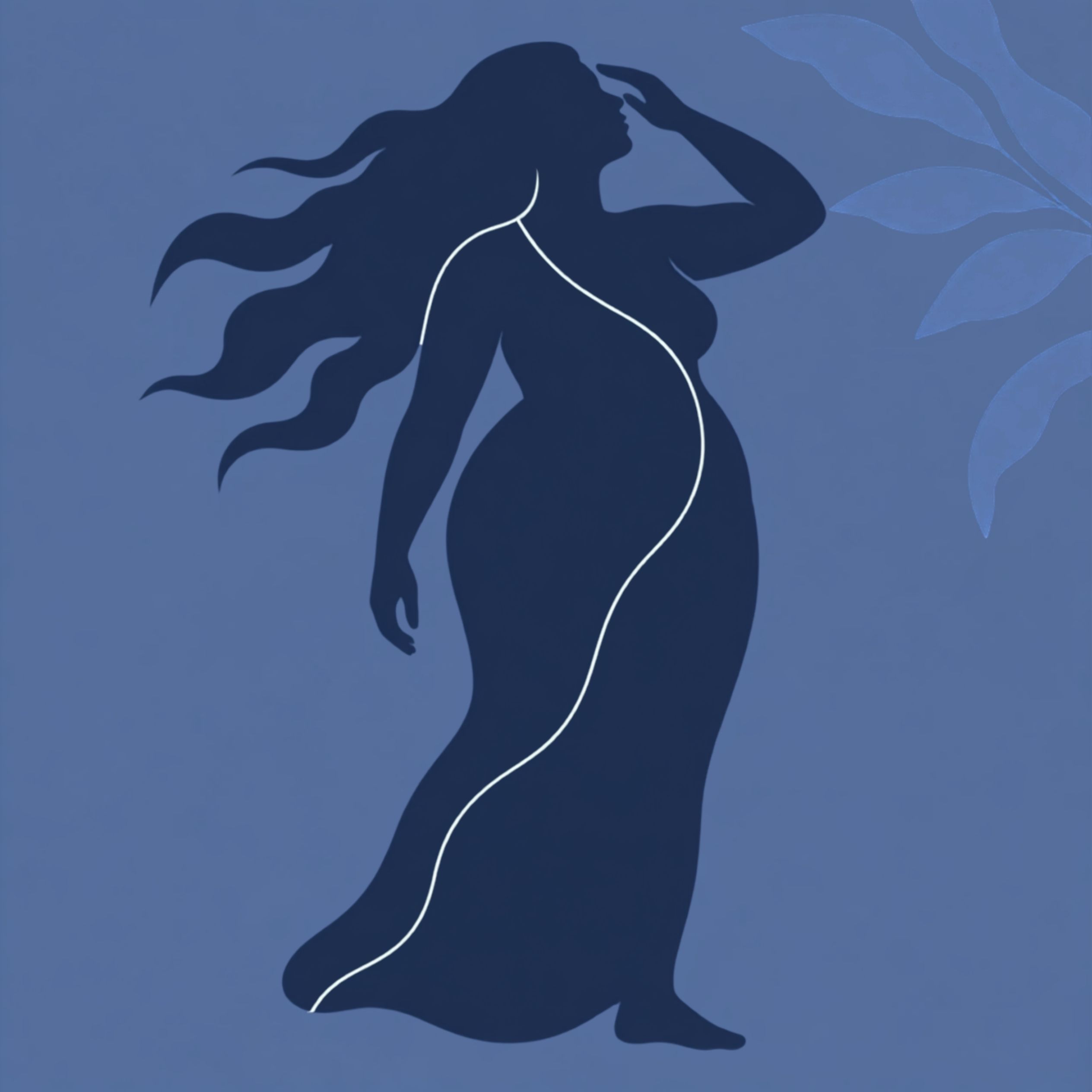
Her nature
What she carries
Access to the dark hours most people sleep through, a night mind that processes what daylight never has room for.
What it costs her
Without the right conditions, that access turns compulsive instead of generative. The Oracle who can't sleep runs a deficit deep enough to distort her own perception, insight becomes loop.
What she's being asked to do
Don't try to silence the night. Make it safe enough to receive what it offers.
The pattern
What this feels like
You fall asleep — that isn't the problem. The problem is the moment, somewhere between 1am and 3am, when your eyes open and your mind is already fully running, as if it never stopped. You are not anxious exactly. You are simply awake, alert, and thinking. By day you manage. But each morning arrives with a deficit, and by evening you are exhausted. By midnight the cycle begins again.
Do you recognise this?
- Waking between 1–3am, mind immediately active
- Daytime exhaustion that doesn't match the night's alertness
- Difficulty returning to sleep once awake
Why this happens: three lenses, one pattern
Your body's natural cortisol rhythm has shifted. Cortisol, the activation hormone, should rise gently at dawn. In this pattern, it spikes in the small hours instead, creating the same chemical alertness as an alarm going off. This is compounded by a drop in blood sugar around 2–3am, which triggers a second wave of adrenaline. Progesterone, which used to dampen this night-time activation, is no longer doing its job.
Your cortisol rhythm has shifted — instead of rising gently at dawn, it spikes in the early hours of the morning. A simultaneous drop in blood glucose sends a second wave of adrenaline. The result is waking at 1–3am with a mind already fully running. This is a hormonal and metabolic event, not a sleep disorder.
Chinese medicine maps a 24-hour clock onto the body, and the Liver's window is 1am–3am. In health, the Liver completes its night-time work quietly and you sleep through it. When its energy is stagnant, it becomes active at its allotted time but cannot finish, and you wake at exactly this window, alert and thinking, with a sense of unfinished business.
In Ayurveda, the 2–6am window is governed by Vata, the air and movement quality, which is naturally light and wakeful at this hour. When Vata is already elevated, this becomes a full waking state. The evening practices that ground Vata before it rises are timing interventions, working with the body's own rhythm rather than against it.
Stabilise blood sugar through the night first — this is your most direct lever. A warm, protein-containing evening meal eaten early is worth more than any sleep supplement. The cortisol rhythm follows from there.
Nutrition as first practice
Food is a tool to create clarity and movement. Three principles guide everything else:
- A warm, protein-containing dinner, eaten early, to stabilise blood sugar through the night
- Slow, easy-to-digest food in the evening that signals the day is genuinely over
- Less caffeine, chocolate, and large meals close to bed — all of which activate rather than settle
A day of eating
Breakfast
Nothing urgent here beyond warmth and protein — oats in warm broth, an egg, something that doesn't spike and crash. The real work for this pattern happens at the other end of the day.
Lunch
Your main meal can be more substantial — oats or another warm grain, protein, cooked vegetables. Just avoid anything that leaves you flat and reaching for sugar mid-afternoon, which tends to echo at 2am.
Dinner
Waking at 2 or 3am with your mind already running is not something you can fix from the bedroom — it usually starts hours earlier, at dinner. Move dinner a little earlier if you can, and make sure it includes protein and a source of fat, not just something light.
Why it works, and a week of swaps
Blood sugar that dips too low overnight is one of the most common, least discussed reasons this pattern wakes at that exact hour. A dinner that's mostly carbohydrate, very light, or paired with alcohol, leaves nothing steady for the body to draw on by 2am.
- Eggs, salmon or a bean stew instead of a salad alone
- A spoon of nut butter or a small handful of nuts on the nights dinner has to be light
- If you do wake, a small warm snack with protein and fat by the bed, rather than lying there willing yourself back to sleep
- Notice what dinner looked like on the nights you slept through, versus the nights you didn't
Track it for a week if you like evidence: what you ate at dinner, and whether you woke. Let your own pattern show you what's true.
Snacks
If you wake in the night, keep something with protein and fat by the bed, a few nuts, a spoon of nut butter, rather than lying there willing yourself back to sleep. During the day, snacks matter less than what's on the dinner plate.
The rhythm matters as much as what's on the plate. Leave real gaps between meals instead of grazing through the day, and treat at least one meal, ideally lunch, as something you actually sit down for, without a screen, chewed slowly. Digestion starts before the first bite reaches your stomach.
This is educational content, not medical advice, diagnosis, or treatment. If you are pregnant, nursing, taking medication, or managing a health condition, check with a qualified healthcare practitioner before changing your diet.
Earthbody practice
Nutrition is the first practice. The deeper one is what Muse Rebellion calls earthbody practice — small, repeatable ways of putting your body back in contact with a rhythm older than the pattern you're in. For the Oracle, that rhythm is dusk: a cortisol clock that has drifted needs the same signals, at the same time, that tell the body the day is truly over.
The Dusk Walk
Go outside in the hour before dark, specifically then, not earlier, not later. The light at dusk tells your circadian system something that artificial light cannot: that the day is genuinely ending. Walk slowly enough to notice the light changing. Ten minutes at dusk does more for the Oracle's sleep than any supplement taken at bedtime.
The Evening Gate
Set a time after which no new problems, information, or demands enter the day, 8pm, 9pm, wherever your life allows. After the Gate closes: no work email, no news, no difficult conversations. Every piece of information absorbed after the Gate is what your body processes at 2am. Close the day before your body has to close it for you.
Go deeper: a pose, a mudra, and a sound for the The Oracle
Pose — Legs Up the Wall. Lie on your back with legs extended vertically up a wall, hips as close to the wall as comfortable. Stay for ten to fifteen minutes. The legs-up position reverses the cortisol pattern, sending a signal of rest and safety that downregulates the 2–3am spike. Practice thirty minutes before bed.
Mudra — Hakini Mudra. Bring all five fingertips of both hands to meet their counterparts, a dome shape. Hold lightly. This mudra is associated with the frontal lobe, memory, and the kind of integrative knowing this pattern accesses in the dark hours — a mudra of insight, not forcing understanding but creating the conditions for it to arrive.
Sound — Xi. The Xi sound (pronounced 'shee' with a soft hiss, like steam releasing) governs the body's circadian rhythm and temperature regulation. Six slow Xi breaths before sleep, hands over the lower abdomen on the exhale, with the intention of closing the day. This is the sound of completion, not urgency.
Not sure this is your pattern?
The Oracle is one of nine patterns the Muse Decoder identifies by reading your body through Ayurveda, Chinese medicine, and Western physiology. If waking at 2 or 3am, racing thoughts, and exhausted days aren't quite it, one of the other eight might fit better. The free decoder takes about ten minutes.
Take the Muse Decoder →The nine Earthbody Muses: the Catalyst, the Seer, the Oracle, the Sanctuary, the Weaver, the Deep Diver, the Truth-Teller, the Transformer, and the Deep Spring. Explore the Library.
Frequently asked questions
What is the Oracle pattern?
The Oracle is one of nine hormonal and energetic patterns identified by the Muse Decoder. It describes a cortisol rhythm that has shifted to spike in the early hours instead of at dawn, which is what produces the 1–3am waking and exhausted days this pattern is known for.
Why do I wake at exactly the same time every night?
Chinese medicine maps the Liver's active window to 1am–3am, and Western physiology shows a real cortisol spike and blood sugar drop at the same hours. Both describe the same event: a rhythm that has shifted so activation arrives in the night instead of at dawn.
What is the fastest first change to try?
Move dinner a little earlier and make sure it includes protein and a source of fat, not just something light. Blood sugar that dips too low overnight is one of the most common, least discussed reasons this pattern wakes at that exact hour.
How do I know if the Oracle is my pattern, and not one of the other eight?
The free Muse Decoder reads your body through Ayurveda, Chinese medicine, and Western physiology and takes about ten minutes. If 1–3am waking and daytime exhaustion are not quite your experience, it will point you toward a better match.