The Catalyst: The Perimenopause Pattern Behind Hot Flashes, Night Sweats, and Sudden Irritability
The Catalyst is one of nine perimenopause patterns identified by the free Muse Decoder. It describes a hormonal thermostat that has become hypersensitive, so small internal temperature changes trigger sudden heat, flushing, and irritability.
If heat rises out of nowhere and demands an exit, if irritability arrives before you've chosen it, if night sweats leave you charred and depleted by morning — this is the Catalyst pattern. It is not a personality change. It is a hormonal thermostat that has lost its calibration and is dumping heat all at once.
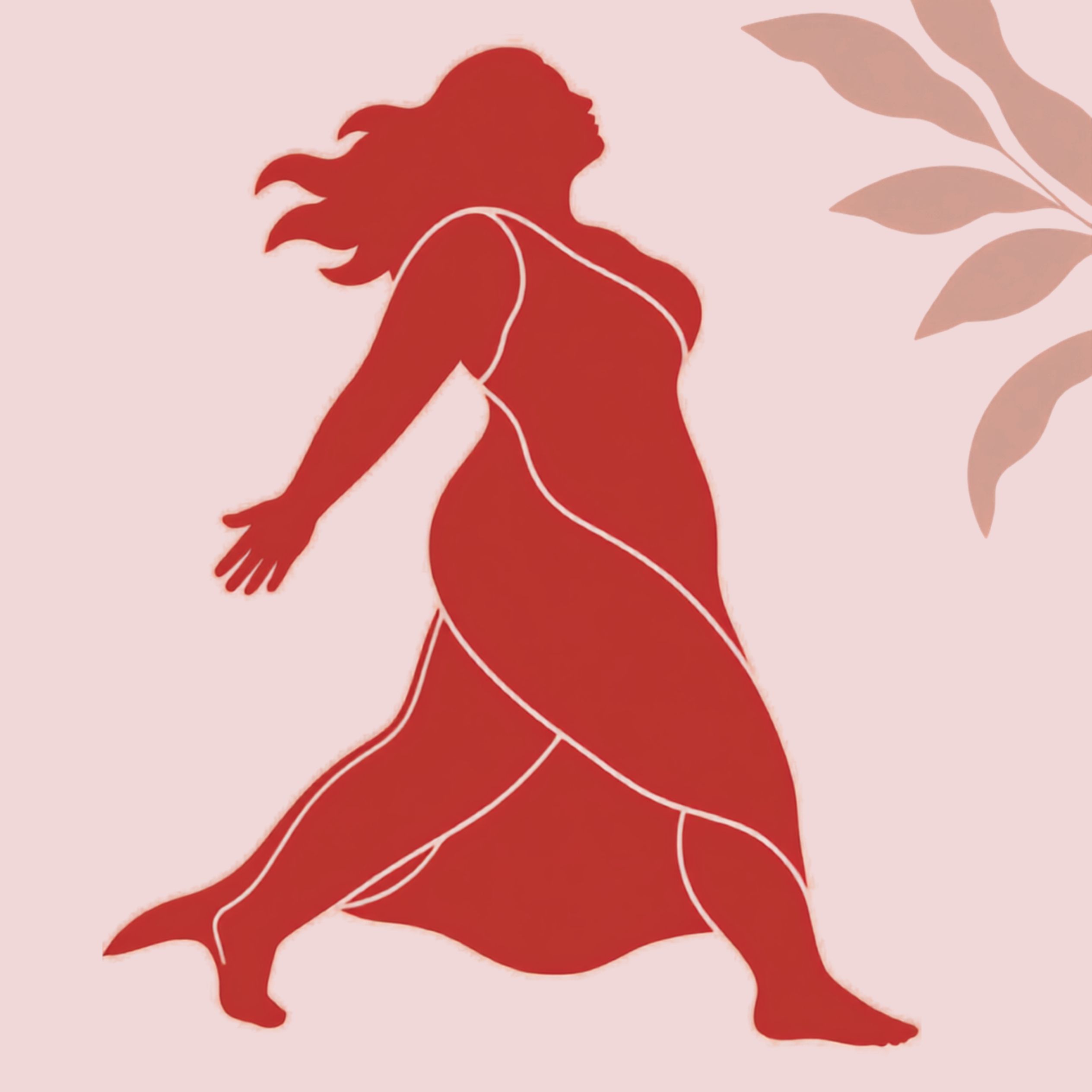
Her nature
What she carries
Intensity that runs at a register other people find difficult to match, and when it has a channel, makes her voice impossible to ignore.
What it costs her
Without a channel, that same fire turns on what she loves. Not because she's destructive, but because undirected intensity always seeks an exit. The Catalyst who isn't creating isn't at rest. She's burning what's available.
What she's being asked to do
Stop asking the fire to be smaller. Give it somewhere to go.
The pattern
What this feels like
A sudden surge of heat that demands an exit. It starts in the chest and climbs to the head, a flash of heat followed by an eruption of white-hot irritation. You find yourself reacting with an intensity that surprises you. When the eruption passes, you are left feeling charred and damp, wondering where that version of you came from.
Do you recognise this?
- Hot flushes and sudden facial flushing
- Fast, hot irritability, quick to ignite and pass
- Night sweats
- Acid or digestive heat after meals
Why this happens: three lenses, one pattern
Your body is struggling to vent what builds up as internal pressure. Your hormonal thermostat, the hypothalamus, has become hypersensitive — think of it as a pressure valve that has turned sticky. As oestrogen fluctuates, your system reacts by dumping heat all at once. You are not "angry": your body is trying to release kinetic energy through a very small exit.
Your hypothalamus, the brain's thermostat, has become hypersensitive to small rises in core temperature. Declining oestrogen narrows the range your body tolerates without reacting, so a change too small to previously register now triggers a full response: vessels dilate, you sweat, heat floods to the surface. The eruption is physiological, not psychological.
In Chinese medicine, the Liver governs the smooth movement of emotion and energy through the body. When it becomes congested through decades of holding and not-quite-releasing, pressure builds until it surfaces as heat. The flash, the irritation that arrives before you've chosen it, the face that flushes — these are that pressure finding its exit.
In Ayurveda, your pattern is excess Pitta, the fire quality, specifically in the blood and liver. Decades of sustained intensity feed this. The goal is not to extinguish the fire but to give it somewhere purposeful to go.
Cool from the inside out before adding anything. Your body needs moisture and descent. Move away from heat-generating foods first — the plant allies and minerals follow after, they do not lead.
Nutrition as first practice
Food is a tool to create clarity and movement. Three principles guide everything else:
- Cooling, high-water-content foods that replenish what heat burns off
- Gentle bitters, which act as a biological brake on rising pressure
- Less chilli, alcohol, and fried food — all of which add fuel to a fire that's already burning
A day of eating
Breakfast
Start the day cool rather than heavy — fruit, yoghurt, or barley steamed soft sit lightly and don't ask your liver to generate more heat first thing. Save anything fried or heavily spiced for later in the day, if at all.
Lunch
Make this the meal where bitter greens earn their place — rocket, chicory, or a squeeze of lemon over most things. Barley or another cooling grain, plenty of vegetables, and nothing that arrives from the pan sizzling.
Dinner
The flush that arrives ten minutes after something spicy, salty, or heavy is not random — your body is already generating heat internally, and heating food adds fuel to a fire that's already burning. Pair your evening meal with something visibly wet: cucumber, a bowl of broth, or a glass of coconut water, and treat chilli, alcohol, and fried food as things you time on purpose rather than eat by default.
Why it works, and a week of swaps
Your system is already generating heat internally, from a liver working overtime and a thermostat that has lost its regular signal. Heating food adds fuel to a fire that is already burning. Food with a high water content gives your body something to cool with instead.
- Add cucumber ribbons or a citrus slice to whatever you're already eating
- End dinner with berries or a cup of cooling herbal tea, like peppermint or hibiscus, instead of dark chocolate or coffee
- If you cook with chilli, add it early and simmer it down rather than finishing a dish with fresh heat
- If you drink alcohol, notice how it affects the evening flush specifically — a smaller glass earlier in the evening tends to change the night
Try this for three days and notice what happens to the evening flush. Not to eliminate anything forever, just to see what your body tells you.
Snacks
Reach for something with real water content — cucumber, melon, citrus — rather than something salty or spiced. A cooling herbal tea, like peppermint or hibiscus, works as well as anything solid.
The rhythm matters as much as what's on the plate. Leave real gaps between meals instead of grazing through the day, and treat at least one meal, ideally lunch, as something you actually sit down for, without a screen, chewed slowly. Digestion starts before the first bite reaches your stomach.
This is educational content, not medical advice, diagnosis, or treatment. If you are pregnant, nursing, taking medication, or managing a health condition, check with a qualified healthcare practitioner before changing your diet.
Earthbody practice
Nutrition is the first practice. The deeper one is what Muse Rebellion calls earthbody practice — small, repeatable ways of putting your body back in contact with a rhythm older than the pattern you're in. For the Catalyst, that rhythm is release: heat that has nowhere to go needs a chosen exit before it finds an involuntary one.
The Heat Walk
Go outside when the heat rises, not despite it, but because of it. Walk fast enough to sweat deliberately, then slow to a stop somewhere with shade and moving air. Stand still. Feel the air on your skin. Let the heat you generated find its exit through your breath and your skin. The Catalyst's heat needs a chosen exit rather than an involuntary one. Do this once a day at the moment the pressure begins to build, before it finds its own way out.
The Temperature Check
Before agreeing to any request that costs you time or energy, pause for 10 seconds before responding. Ask yourself: is this urgent for me, or am I absorbing someone else's urgency? The Catalyst's fire is a resource, not a public utility. One conscious pause per day is enough to begin changing the pattern.
Go deeper: a pose, a mudra, and a sound for the The Catalyst
Pose — Warrior II. Stand with feet wide. Front knee bends over ankle, arms extended parallel to the floor, gaze forward. Hold for five slow breaths. This is not a resting pose, it is a channelling one. The fire you carry needs direction, not suppression.
Mudra — Shankha Mudra. Wrap the four fingers of the left hand around the right thumb, then touch the left thumb to the tip of the right middle finger. Hold the joined hands at the chest. Shankha Mudra is cooling — it specifically calms anger and pacifies rising heat. Use it in the moment before you react, not after. Three to five minutes.
Sound — Xu. The Xu sound (pronounced like a soft 'shhh' with the lips slightly parted) is the healing sound for the Liver, where this pattern generates its charge. Inhale deeply, and on the exhale shape the Xu sound, imagining green light leaving the sides of the ribcage. Six repetitions, morning and evening.
Not sure this is your pattern?
The Catalyst is one of nine patterns the Muse Decoder identifies by reading your body through Ayurveda, Chinese medicine, and Western physiology. If heat, irritability, and night sweats aren't quite it, one of the other eight might fit better. The free decoder takes about ten minutes.
Take the Muse Decoder →The nine Earthbody Muses: the Catalyst, the Seer, the Oracle, the Sanctuary, the Weaver, the Deep Diver, the Truth-Teller, the Transformer, and the Deep Spring. Explore the Library.
Frequently asked questions
What is the Catalyst pattern?
The Catalyst is one of nine hormonal and energetic patterns identified by the Muse Decoder. It describes a hormonal thermostat that has become hypersensitive, so small internal temperature changes trigger a full heat response — which is what produces the hot flashes, night sweats, and sudden irritability this pattern is known for.
Why do hot flashes happen during midlife?
Declining oestrogen removes the calibration on your hypothalamus, the brain's thermostat, so it reacts to temperature changes too small to previously register. The result is a full-body heat response: vessels dilate, you sweat, and heat floods to the surface, all within moments.
What is the fastest first change to try?
Pair your evening meal with something visibly wet — cucumber, a bowl of broth, or a glass of coconut water — and treat heating foods like chilli and alcohol as something you time on purpose. Cooling, high-water food gives your body something to cool with instead of adding more fuel to a fire that's already burning.
How do I know if the Catalyst is my pattern, and not one of the other eight?
The free Muse Decoder reads your body through Ayurveda, Chinese medicine, and Western physiology and takes about ten minutes. If heat, irritability, and night sweats are not quite your experience, it will point you toward a better match.