The Deep Spring: The Perimenopause Pattern Behind Vaginal Dryness, Low Libido, and Thinning Skin
The Deep Spring is one of nine perimenopause patterns identified by the free Muse Decoder. It describes systemic tissue dehydration as oestrogen and testosterone decline together, producing vaginal dryness, low libido, and thinning skin.
If you feel parched in your skin, your joints, and your spirit, if your libido has moved far out to sea, if you feel brittle in a way you didn't used to — this is the Deep Spring pattern. It is not that you've stopped wanting. It is a body running dry at a hormonal level, waiting to be replenished.
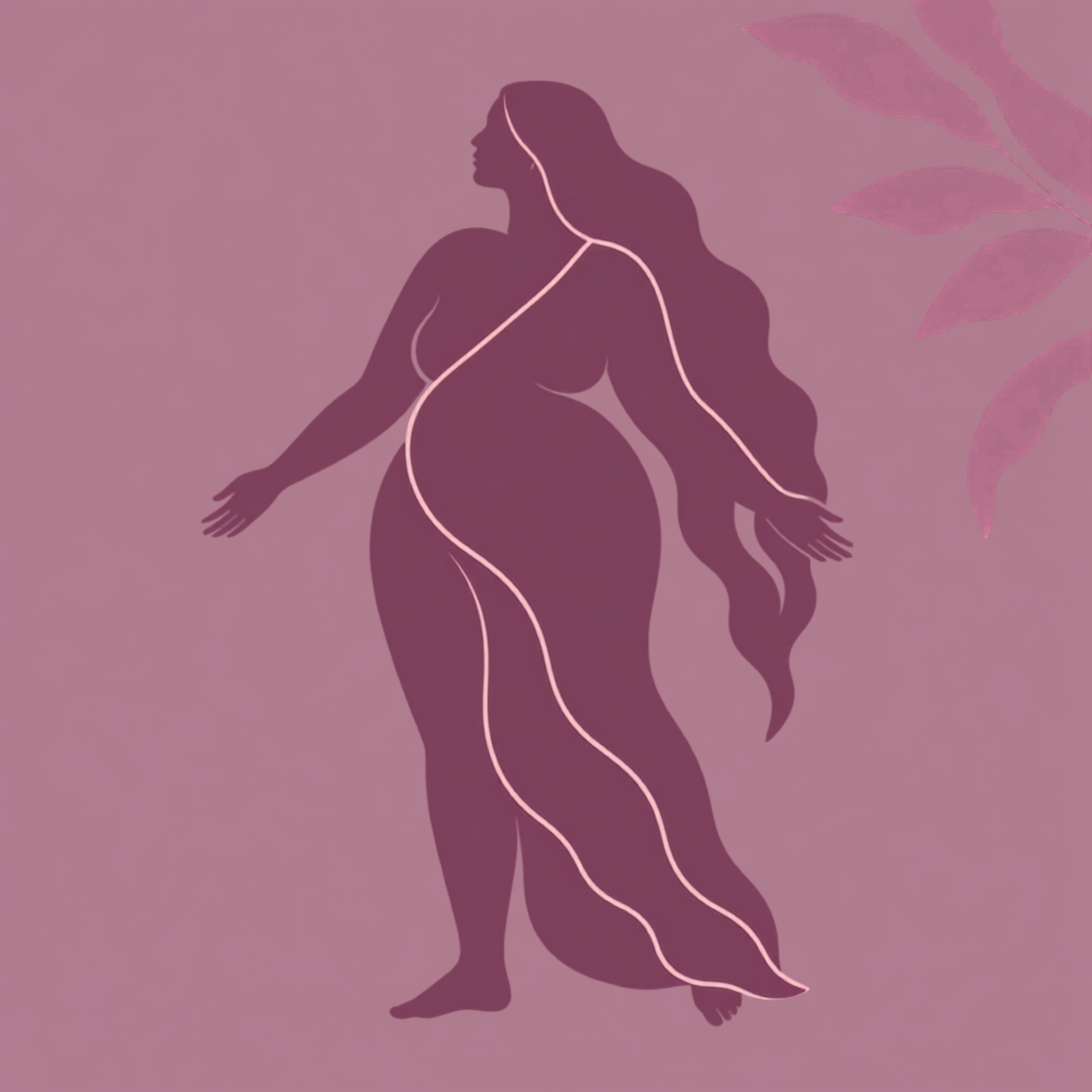
Her nature
What she carries
Access to a creative source older than any single expression of it, vitality that has nothing to do with performance.
What it costs her
When the conditions for its flow are absent, that source presents as absence instead of depth. She experiences it as permanent loss, when really, the path to it has only changed.
What she's being asked to do
The source hasn't dried up. Find the path to it again, under these new conditions.
The pattern
What this feels like
You feel parched, in your skin, your joints, and your spirit. Your libido has moved far out to sea. You have spent years being the flow for everyone else, and now your own channel is running dry. You feel brittle, easily cracked by small stresses, and physically less fluid than you used to be. The creative impulse, the part of you that generated ideas, desire, and connection, feels quieter than it should.
Do you recognise this?
- Vaginal dryness affecting comfort and pleasure
- Very low or absent libido
- Crêpey, thinning skin
- Creative and emotional flatness
Why this happens: three lenses, one pattern
Your body is struggling with systemic desiccation. As oestrogen, the hormone of succulence, declines, your tissues lose their ability to hold onto hydration. Testosterone, which also declines in perimenopause, governs the neurochemistry of desire and the maintenance of vital tissue quality. When both fall together, the effect is dryness at every level.
Oestrogen is the primary hormonal regulator of fluid balance across every tissue in the body, not just the reproductive system but the joints, skin, mucous membranes, eyes, and bladder. When it declines, tissue dehydration is systemic. This is not a water intake problem. It is a hormonal regulation problem, and collagen production falls at the same time.
In Chinese medicine, the Kidney's cooling, moistening aspect keeps tissues fluid, joints lubricated, and internal temperature regulated. Your pattern is a depletion of that aspect. A specific kind of heat emerges: not an erupting fire but a low, persistent warmth that comes from insufficient cooling. The dryness, everywhere, is the most direct expression of what is missing.
In Ayurveda, Vata is the air and movement quality, and its primary characteristic is dryness. When Vata becomes excessive in the fluid tissues, the body's nourishing plasma becomes thinner and the reproductive tissues lose vitality. The intervention nourishes from outside and inside simultaneously, because the body needs the moisture signal from every direction at once.
Replenish the deepest tissues first, through fats, moisture, and specific building foods. Supplements alone cannot reach where food and topical oil can. Consistency over months is the measure here, not weeks.
Nutrition as first practice
Food is a tool to create clarity and movement. Three principles guide everything else:
- A source of fat or oil at meals that currently don't have one — fat is what actually holds moisture in tissue
- Mineral-rich, deeply nourishing food that seeds fluid retention within the tissues
- Less reliance on water alone — dryness at this level needs fat and oil more than it needs more water
A day of eating
Breakfast
If you're drinking more water than ever and still feel dry, in your skin, your eyes, everywhere, water alone was never going to be the whole answer. Add a source of fat or oil to a meal you currently eat without one.
Why it works, and a week of additions
This pattern is about deep tissue and fluid depletion, and dryness at this level often needs fat and oil more than it needs more water. Fat is what actually holds moisture in tissue.
- A drizzle of good olive oil or sesame oil over vegetables or grains
- Ghee, or a plant oil like coconut, stirred into porridge or rice
- Oily fish a few times a week, if that works for you
- A small handful of nuts or seeds as a daily habit rather than an occasional one
This tends to be a slow, quiet shift. Give it a few weeks and pay attention to your skin and your eyes specifically, they usually tell you first.
Lunch
Sweet rice or another slow-cooked grain, a little sesame oil, plenty of vegetables. Treat oil as an ingredient, not a garnish, at this meal too.
Dinner
Something slow-cooked and moistening, cardamom and sesame oil, oily fish if that works for you. Warm, unhurried, and never stripped of fat.
Snacks
A small handful of nuts or seeds as a daily habit rather than an occasional one. Small, consistent additions of fat matter more here than one large effort.
The rhythm matters as much as what's on the plate. Leave real gaps between meals instead of grazing through the day, and treat at least one meal, ideally lunch, as something you actually sit down for, without a screen, chewed slowly. Digestion starts before the first bite reaches your stomach.
This is educational content, not medical advice, diagnosis, or treatment. If you are pregnant, nursing, taking medication, or managing a health condition, check with a qualified healthcare practitioner before changing your diet.
Earthbody practice
Nutrition is the first practice. The deeper one is what Muse Rebellion calls earthbody practice — small, repeatable ways of putting your body back in contact with a rhythm older than the pattern you're in. For the Deep Spring, that rhythm is moisture: tissues that have run dry need reminding, regularly, of what fluid and receiving feel like.
The Water Practice
Go to water, a river, a stream, a pond, the sea, a fountain if that is what you have. Stand near it or in it if you can. Listen to it. Watch it move. The negative ions generated by moving water measurably reduce cortisol and improve mood. Visit water regularly. Let it remind you what you are made of and what is still possible when the right conditions return.
The Reception Hour
One hour per week belongs entirely to receiving. During this hour you do not give, not to your family, your work, your phone, your to-do list. It is not earned by completing other things first. It goes in your diary as a non-moveable appointment. The most radical act here is not a new supplement or a new food. It is claiming space in your own life to be filled.
Go deeper: a pose, a mudra, and a sound for the The Deep Spring
Pose — Butterfly Pose. Sit with the soles of the feet together and knees fallen open. Allow gravity to do the work, do not push the knees down. Hold for five minutes, with a bolster or block under the knees if needed. This opens the sacral area, the energetic home of desire, creativity, and vital moisture — a practice of remembering what the body is capable of.
Mudra — Varuna Mudra. Touch the tip of the little finger to the tip of the thumb. Hold the other fingers gently extended. Varuna mudra is the water mudra — it governs the fluid element in the body, including the lubrication of tissues and the vital moisture this pattern has lost. Practise for ten minutes daily, specifically during butterfly pose.
Sound — Chui. The Chui sound (pronounced 'chway') works on Kidney Yin, the cooling, moistening, receptive aspect of Kidney energy. Sit in butterfly pose, palms facing up in a receiving gesture, and on the exhale imagine dark water rising slowly from a deep source. Six to nine repetitions, morning and evening.
Not sure this is your pattern?
The Deep Spring is one of nine patterns the Muse Decoder identifies by reading your body through Ayurveda, Chinese medicine, and Western physiology. If vaginal dryness, low libido, and thinning skin aren't quite it, one of the other eight might fit better. The free decoder takes about ten minutes.
Take the Muse Decoder →The nine Earthbody Muses: the Catalyst, the Seer, the Oracle, the Sanctuary, the Weaver, the Deep Diver, the Truth-Teller, the Transformer, and the Deep Spring. Explore the Library.
Frequently asked questions
What is the Deep Spring pattern?
The Deep Spring is one of nine hormonal and energetic patterns identified by the Muse Decoder. It describes systemic tissue dehydration as oestrogen and testosterone decline together, which is what produces the vaginal dryness, low libido, and thinning skin this pattern is known for.
Why does dryness affect so many parts of the body at once during midlife?
Oestrogen regulates fluid balance across every tissue in the body, not only the reproductive system, but joints, skin, and mucous membranes too. As it declines alongside testosterone, which governs desire and vital tissue quality, the effect is dryness at every level simultaneously.
What is the fastest first change to try?
Add a source of fat or oil to a meal you currently eat without one, a drizzle of olive oil, a spoon of ghee. Dryness at this depth often needs fat more than it needs more water, because fat is what actually holds moisture in tissue.
How do I know if the Deep Spring is my pattern, and not one of the other eight?
The free Muse Decoder reads your body through Ayurveda, Chinese medicine, and Western physiology and takes about ten minutes. If vaginal dryness, low libido, and thinning skin are not quite your experience, it will point you toward a better match.